2026-09-20 · Mike Schroeder
What To Do In The First Hour After A Basement Flood In Oshkosh
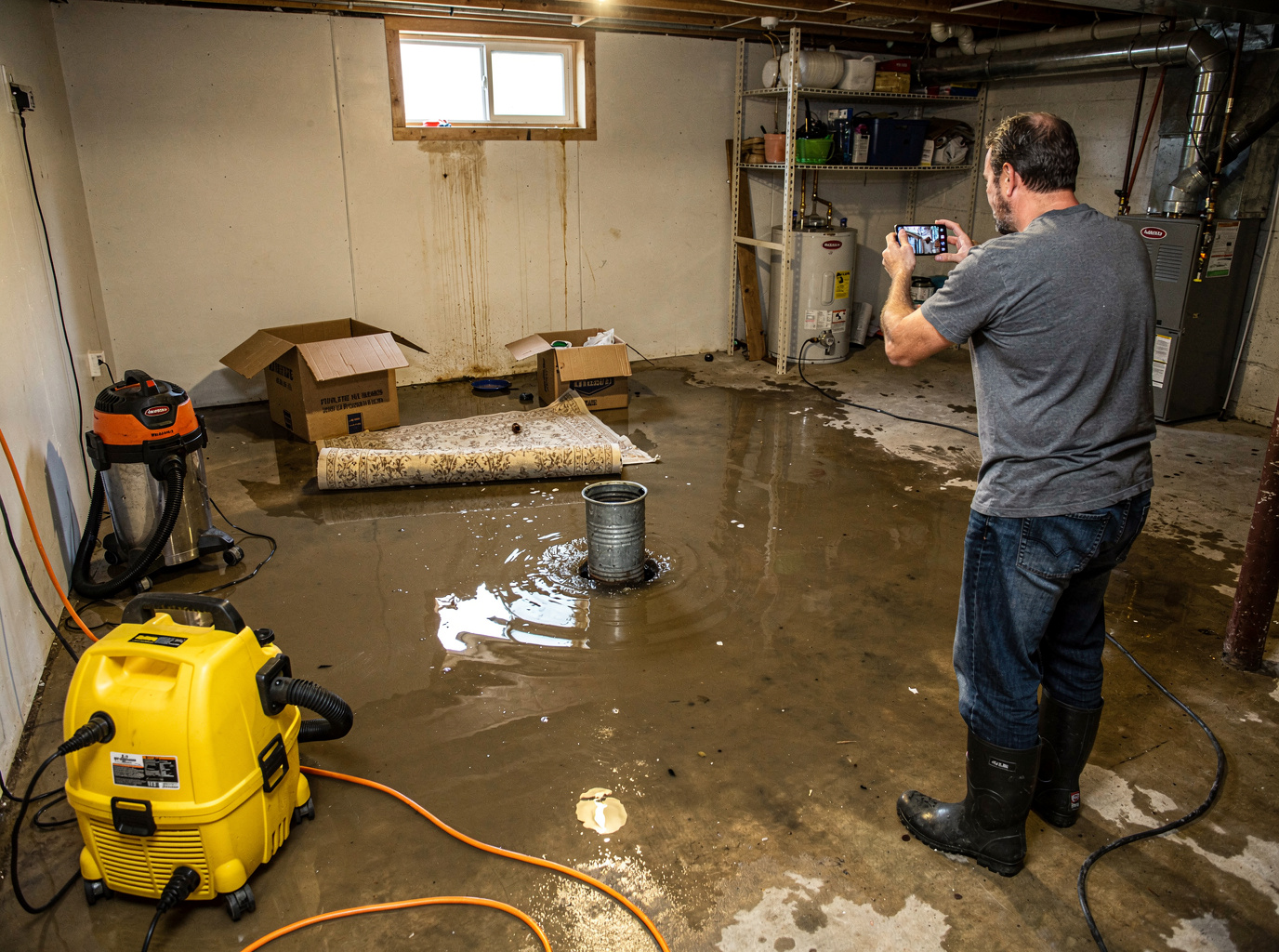
In the first hour after a basement flood in Oshkosh, turn off electricity at the main panel if water is near outlets, shut off the water supply if the source is identifiable, and move valuables to higher ground while avoiding direct contact with floodwater. This sequence prevents electrical hazards common in older Downtown and Northwest neighborhood homes built before modern codes. Winnebago County basements often sit on clay-heavy soils that hold moisture longer, so quick action reduces mold risk during the humid continental summers that follow snowy winters.
Assess Immediate Hazards and Water Source
Begin by identifying whether the flood stems from a burst pipe, snowmelt, or heavy rain runoff, which frequently affects Oshkosh properties near the University of Wisconsin-Oshkosh campus during spring thaws. Walk the perimeter safely without entering standing water and note any sewage smell or oil sheen that indicates contamination. Homes in the Northwest area often have older foundation walls that crack under repeated freeze-thaw cycles, allowing groundwater to enter faster than in newer builds. Document visible water levels with photos from a safe distance before any removal begins. If the source is a plumbing issue, isolate the line to prevent additional flow into the basement.
Prioritize Safety and Power Management
Cut power to the affected area at the breaker box once you confirm no water has reached electrical panels, a step critical in humid continental climates where winter pipe freezes in Fond du Lac and Green Bay corridors often lead to sudden releases. Avoid using household fans or vacuums until power is secured and water depth is assessed. Oshkosh Public Museum district properties frequently feature finished basements with outlets at floor level, raising shock risk during the first hour. Wear rubber boots and gloves, and never touch metal objects near water. If the flood involves more than a few inches, exit and wait for professional Emergency Water Extraction teams rather than attempting entry.
Start Controlled Water Removal
Once safe, use a wet-dry vacuum or submersible pump on the shallowest areas first to lower levels gradually and avoid structural stress on basement floors common in Winnebago County. Focus on directing water toward floor drains if they remain clear, but stop if backflow occurs. Standing Water Extraction techniques become essential here because clay soils in Oshkosh retain water that seeps back overnight. Limit removal to the first hour to the amount one person can handle safely; deeper floods require Basement Water Removal equipment. Avoid spreading water into adjacent rooms by containing the area with towels at door thresholds.
Document Conditions and Contact Professionals
Photograph water depth, affected materials, and any visible damage before extraction alters the scene, which supports insurance claims for properties throughout Oshkosh. Note the time and weather conditions, as cold winters often trigger frozen pipe failures that spike calls in the region. Reach out to a local team based at 2604 S Washburn St for Emergency Water Extraction within the hour when water exceeds six inches or shows signs of contamination. Review related guidance on Why Oshkosh Winters Spike Emergency Water Extraction Calls and Emergency Water Extraction Costs In Winnebago County to understand next steps. This documentation and call sequence protects both the home and the claim process in the critical first hour.