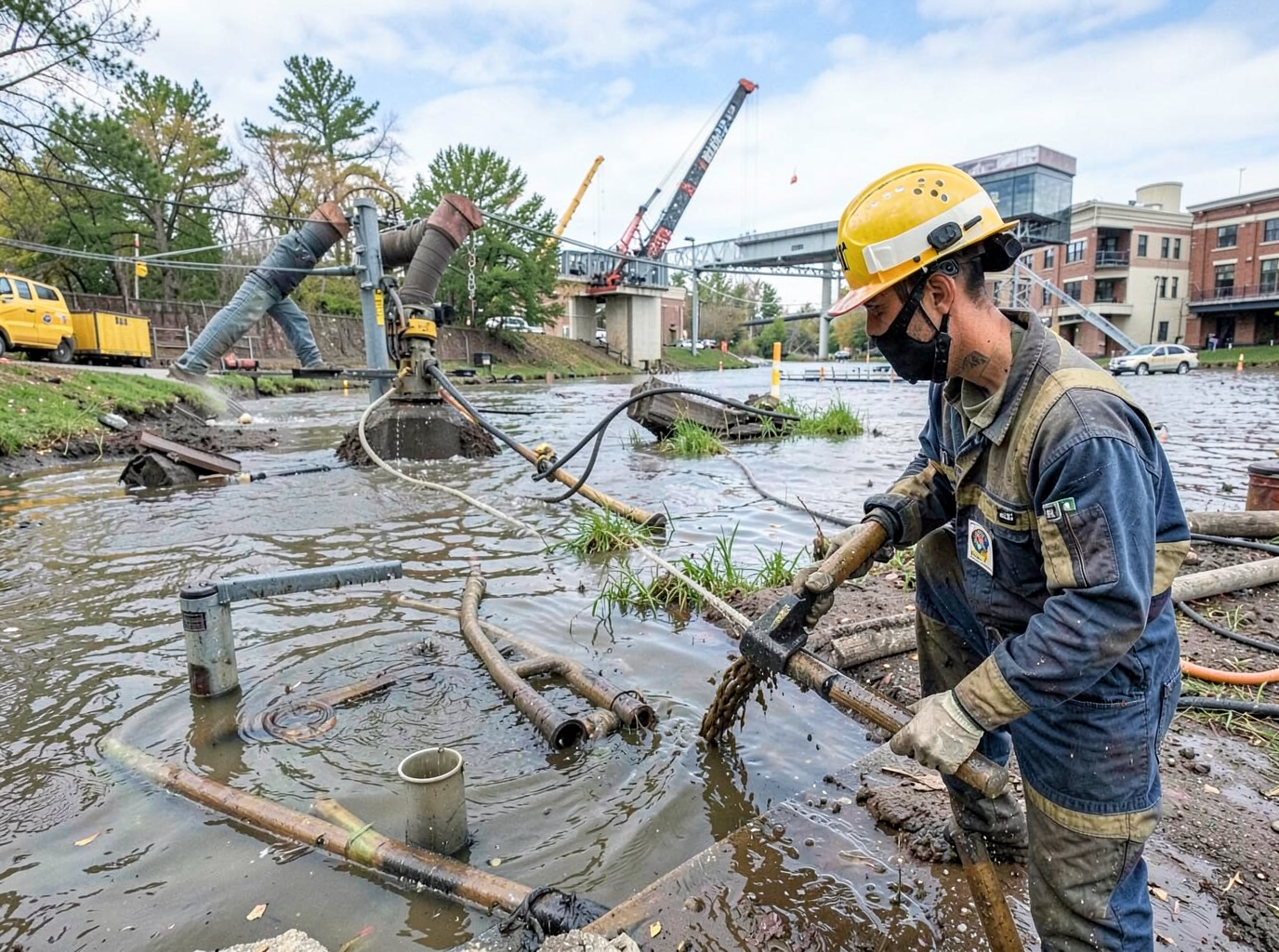
Oshkosh sits in Winnebago County under a humid continental climate where heavy spring snowmelt and summer storms frequently push water into older basements and crawl spaces. Homes in the Downtown neighborhood often date to the early 1900s with limestone foundations and clay soils that hold moisture, slowing natural drainage and requiring high-volume pumps plus moisture meters to locate hidden pockets behind plaster walls. Crews at Oshkosh Water Recovery, based at 2604 S Washburn St, routinely extract standing water from these tight, low-ceiling spaces while protecting oak floors and original millwork that can warp within hours.
Northwest Oshkosh properties near the University of Wisconsin-Oshkosh face different challenges when runoff from paved lots meets older storm sewers. Flood water here often carries silt from nearby streets and can reach electrical panels or forced-air ducts before homeowners notice. Extraction teams isolate power, remove water in staged lifts to avoid structural stress, and document every step for insurance adjusters who serve both Oshkosh and nearby Fond du Lac and Green Bay markets.
Warm summer humidity in the region speeds mold growth once water is gone, so extraction always includes targeted drying of joists and subfloors rather than simply pumping visible water. Technicians check for hidden saturation in insulation around Oshkosh Public Museum-area homes where balloon-frame construction allows water to travel upward unseen. This local knowledge prevents repeat callbacks that generic equipment operators frequently miss.
Technician insight
In Oshkosh, the thing that catches most people out with Flood Water Extraction is how quickly snowmelt from a single warm week in March saturates the clay soils under Downtown limestone foundations, pushing water into wall cavities that never fully dried from the previous season.
Northwest Neighborhood Spring Melt
Heavy overnight snowmelt sent water through a cracked foundation into a 1920s home near the University of Wisconsin-Oshkosh. Pumps removed two feet of water from the basement while infrared scans found saturation behind plaster. Targeted drying prevented mold in the floor joists; the family returned within four days.
Flood Water Extraction Services We Offer
✓Basement Flood Extraction
High-volume pump removal of standing water from older Oshkosh basements followed by moisture mapping of limestone walls and dirt floors.
✓Crawl Space Water Removal
Targeted extraction and drying in low-access crawl spaces common in Northwest neighborhood homes where clay soils trap moisture after snowmelt.
✓Storm Sewer Backup Extraction
Removal of contaminated flood water that enters through overwhelmed Winnebago County storm lines, including containment and disposal.
✓Post-Thaw Water Extraction
Spring snowmelt recovery for Downtown properties where rapid temperature swings force water through foundation cracks in historic homes.
✓Duct and Insulation Drying
Extraction of water from forced-air systems and wall cavities to stop hidden mold growth after summer storms in Oshkosh.
Flood Water Extraction Cost in Oshkosh, WI
| Service | Typical Range | What Affects It |
|---|---|---|
| Residential Basement Extraction | $650–$1,800 | Varies with water depth and square footage in pre-1950 homes |
| Crawl Space Extraction | $450–$1,200 | Higher when clay soil and low clearance slow equipment placement |
| Storm Backup Cleanup | $900–$2,400 | Includes containment for contaminated water from Winnebago County sewers |
| Hidden Cavity Drying Add-On | $300–$700 | Required when water reaches insulation or ducts in balloon-frame houses |
Ranges are typical for Oshkosh, WI and confirmed with an exact written quote before any work starts.
How it works
- 1
On-Site Assessment
Technicians arrive within the hour, map water depth, test electrical safety, and note affected materials in Winnebago County homes.
- 2
Water Extraction
High-capacity pumps and vacuums remove standing water while protecting original floors and millwork typical of Downtown Oshkosh.
- 3
Moisture Verification
Infrared meters locate hidden saturation in walls, joists, and insulation before drying begins.
- 4
Documentation And Hand-Off
Photos and readings are provided for insurance claims; equipment is staged for continued drying if needed.
Pricing
Pricing depends on water volume, access difficulty, and whether hidden cavities in older homes require extra drying time; upfront quotes given on site.